212Views

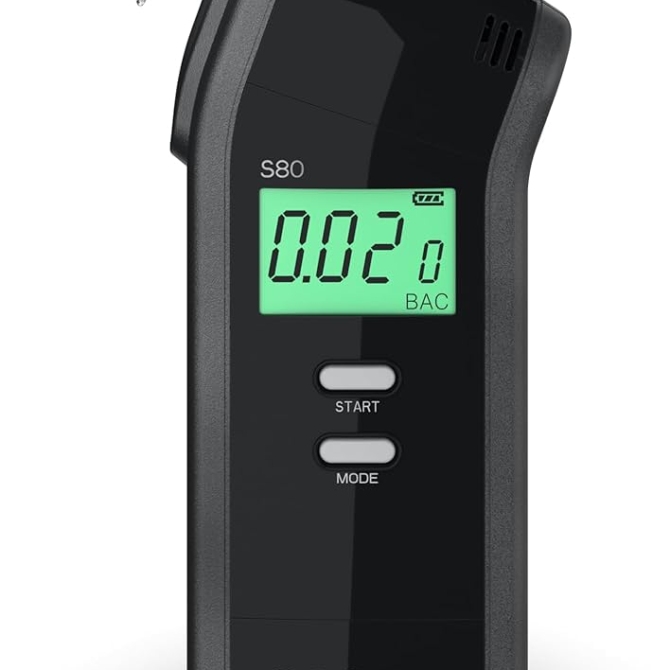
Milton DUI Attorney | Refusing Breath Test
1. The Georgia Implied Consent Framework
When you drive on Georgia roads, you automatically agree to the state’s implied-consent laws. They state that if you are the defendant in a DUI proceeding, you are deemed to have consented to a breath or blood test conducted by law-enforcement officers. Failing to comply triggers automatic penalties, even before any court decision.
In Atlanta, the penalties are part of the Automated License Suspension (ALS) program. An ALS suspension is effective immediately when a driver either:
- Refuses the test, or
- Delivers a result that proves impairment (blood alcohol level ≥ 0.08 % or a breath test reading ≥ 0.08 %).
The suspension lasts for 90 days. The driver can request a hearing to lift the suspension, but until the hearing a license is unusable for driving.
2. How Refusal Affects the License
The court treats a refusal the same way it treats a positive result when it comes to the ALS. There is no “soft” penalty that depends on the driver’s reasoning for refusing – the law is blunt:
- Refusal → Automatic 90-day suspension.
- Positive test result → Automatic 90-day suspension.
The driver can appeal the suspension. If the appeal is successful, the license is reinstated before the 90-day period expires. If not, the suspension stands and the driver must wait the full 90 days (or a shorter period if the court orders a shorter suspension).
3. Evidence: Refusal vs. Breath/Blood Results
When a driver refuses a breath test, the officer can still use field sobriety tests (FSTs) and body-cam footage to build evidence of impairment. However, the refusal itself becomes a crucial piece of evidence.
3.1. What a Refusal Tells the Court
- Implied Admission of Guilt: In Georgia, a refusal can be treated as a statement that the driver is aware of his legal vulnerability. Prosecutors argue that the driver’s refusal demonstrates a consciousness of guilt.
- Lack of Clean Break: A granted test result (positive or negative) gives precise data. A refusal leaves the court without measurable evidence of impairment. This can make the case harder for the defense, but the prosecution must still prove impairment by other means.
3.2. Field Sobriety Tests (FSTs)
FSTs are structured physical and mental tasks. The officer records:
- Impaired gait (walking in a straight line)
- Impaired balance (standing on one foot)
- Impaired coordination (touching a target)
If the driver refuses the breath test, the officer may still administer FSTs. Poor performance strengthens the prosecution’s claim that the driver was impaired, even without a breath or blood result.
3.3. Body-Cam Footage
In Atlanta, many officers carry body-cams. Recorded footage shows:
- Driver demeanor (e.g., signs of nausea, slurred speech)
- Interaction with officer (refusal, arguments)
- Environmental context (traffic conditions, other evidence)
Body-cam video can help establish the driver’s level of impairment and the circumstances surrounding the refusal.
4. Prosecutorial Arguments: “Consciousness of Guilt”
Georgia prosecutors can argue that a refusal indicates that the driver was aware that the test would reveal impairment. This falls under the consciousness of guilt doctrine: the idea that a person may not admit guilt but can demonstrate awareness of wrongdoing through conduct.
- Refusal = “I know you will find me over the limit.”
- The court may view the refusal as a strategic move to avoid a formal test but still shows that the driver is aware of the legal consequences.
Because the law imposes a 90-day suspension regardless of the reason for refusal, the court can see this as an admission of probable impairment. However, the prosecution still needs to prove that the driver was, in fact, driving under the influence. They can do so through FSTs, body-cam evidence, and any other observable behaviors.
5. Timing and Court Appearances
5.1. Initial Stop and Refusal
- Stop: Officer observes suspect driving erratically or is pulled over for any reason.
- Request: Officer asks for breath sample.
- Refusal: Driver refuses to provide the sample.
5.2. Field Sobriety Tests and Body-Cam
- FSTs: Conducted immediately after refusal if the officer believes the driver is impaired.
- Body-Cam: Activated automatically or manually by the officer.
5.3. Administrative Hearing
- Notice: Driver receives a notice of the 90-day suspension within a few days of arrest.
- Administrative Hearing: Typically scheduled within 30–60 days after the stop.
- Outcome: Driver can request a hearing to lift the suspension. If denied, the 90-day suspension remains.
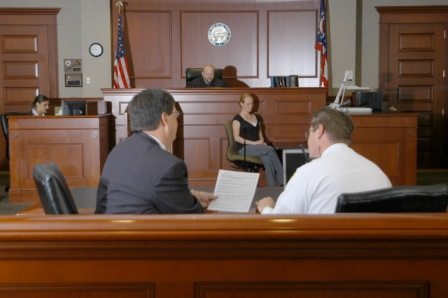
5.4. Criminal Hearing
- Charges Filed: The prosecutor files a DUI charge, typically within 48–72 hours of arrest.
- Initial Appearance: Driver appears in court within 10–14 days of the charge filing.
- Pre-trial Motions: The defense can file a motion to suppress evidence (e.g., body-cam footage, FST results) if there are alleged procedural errors.
- Trial: If the case goes to trial, the defense can argue that the evidence is circumstantial and that there is no concrete proof of impairment.
6. How Refusal Interacts with Other Evidence
| Evidence | Impact on Case | Notes |
|---|---|---|
| Refusal (no breath test) | Raises “consciousness of guilt” claim | Requires additional evidence of impairment |
| Positive FSTs | Compensates for lack of breath result | May be weighed by judge/jury |
| Body-Cam video | Visual proof of impairment | Can be subject to admissibility challenges |
| Witness statements | Supports or contradicts impairment claims | Must be corroborated |
In many cases, a single strong piece of evidence (e.g., a positive FST combined with body-cam footage of slurred speech) can outweigh the lack of a breath test.
7. Decision Tree
A. If You Refused the Breath Test
| Step | Action | Possible Outcomes |
|---|---|---|
| 1 | Remember the 90-day ALS suspension. | Automatic suspension |
| 2 | Attend the administrative hearing. | May lift suspension if you can prove the test was unreasonable or your rights were violated |
| 3 | File a criminal defense motion to challenge evidence (e.g., improper FST administration). | Judge may suppress evidence |
| 4 | Prepare to present FST results and body-cam evidence. | Judge/jury may find impairment |
B. If You Blew the Breath Test (Positive Result)
| Step | Action | Possible Outcomes |
|---|---|---|
| 1 | Accept the 90-day ALS suspension. | Automatic suspension |
| 2 | Proceed with administrative hearing to challenge the suspension (rare). | Rarely successful unless procedural errors |
| 3 | Prepare criminal defense (challenge accuracy of test, show mitigating circumstances). | Possible reduced charges or plea agreement |
C. If Blood Test Was Requested (and You Refused)
| Step | Action | Possible Outcomes |
|---|---|---|
| 1 | Blood test refusal triggers the same 90-day ALS suspension. | Automatic suspension |
| 2 | Blood test refusal may be more heavily scrutinized (blood tests are considered more reliable). | Prosecutors may emphasize the refusal as stronger evidence of guilt |
| 3 | Evidence of impairment must be derived from FSTs, body-cam, or eyewitness accounts. | Chance of a weaker case if evidence is weak |
8. Practical Tips for the Driver
- Do Not Refuse: The safest option to avoid the automatic suspension is to comply with the breath test.
- Seek Immediate Legal Counsel: An experienced DUI attorney can help navigate the administrative hearing and the criminal case.
- Preserve Evidence: Keep any notes about the stop, the officer’s questioning, or any witnesses.
- Do Not Speak About the Incident to Anyone: Anything you say can be used against you.
9. Why James Yeargan Is the Right Choice
When facing a DUI case in Atlanta—especially if you have refused a breath test—time is of the essence. James Yeargan has built his practice on a deep understanding of Georgia’s DUI laws, the intricacies of the ALS program, and the nuances of evidence admissibility. He knows how to:
- Challenge improper field sobriety test administration,
- Negotiate favorable plea agreements,
- Navigate the administrative hearing process,
- Use body-cam footage strategically,
- Build a defense that emphasizes procedural errors and rights violations.
With a proven track record of protecting drivers’ rights and securing the best possible outcomes, James Yeargan is the attorney you need if you’re facing a DUI charge in Atlanta.