189Views
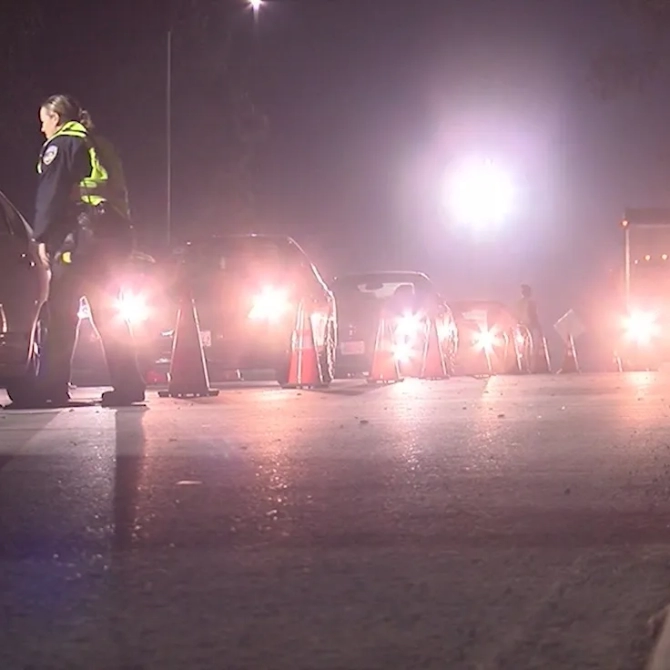
You managed to get to your destination in Metro Atlanta. You parked your car, gave the keys to a valet or maybe you were in a small fender-bender and walked to a gas station and waited for an Uber. Twenty minutes later, you come face-to-face with an Atlanta police officer or Georgia State Patrol trooper who smells alcohol, and begins a DUI investigation. Most drivers believe that they are safe because they are no longer in the car. In Georgia, though, police have the right to—and do—charge you with driving under the influence even after you have surrendered the keys.
This is a legal concept about creating a temporal link between how impaired you are and how you physically operate the vehicle. If an officer catches you with your hands on the wheel of a vehicle while it is in motion, that doesn’t necessarily mean you are driving under the influence in Georgia.Being caught with your hands on the steering wheel of a vehicle while the car is moving does not strictly require a DUI conviction in Georgia. Georgia statutes hold drivers liable for DUI if their blood alcohol level is at or above 0.08 grams for the 3 hour period following the cessation of driving or being in actual physical control of a vehicle, but before those hours expire, provided the alcohol was consumed before that time. If the police do catch you after you’ve left the car, they will attempt to use your current level of intoxication to establish that you were drunk when you were operating the vehicle.
One of the biggest challenges facing prosecutors in these types of post-driving investigations is determining the exact time the alcohol got into you. This leaves the way open for one of the best defenses in such situations: the post-driving drinking defense. The timeline of the state is completely disrupted if you dropped off your car at a Buckhead bar after having a drink, walked over to your friend’s house and had another drink or stood on the side of Interstate 85 and had a drink from a flask to soothe your nerves after a crash. The prosecution has to prove that you were impaired at the time you were driving, and not 30 minutes after consuming the drinks.
Prosecutors often use a little-known scientific technique known as “retrograde extrapolation” to fill in the time between your last driving session and the time the officer tested you, using breath or blood. They’ll introduce into a Fulton County courtroom a state toxicologist who can determine your blood alcohol content at the time of the accident. But this mathematical speculation is very susceptible to attack. The accuracy of the retrograde extrapolation depends on knowing exactly what you’ve eaten, your true metabolic rate, and the exact minute that the last drink was consumed. This is a very specialized type of biological information that is not often held by the state and is something a good defense attorney can attack and prove to be an estimate rather than a scientific certainty.
The entire prosecution is circumstantial because the arresting officer never actually saw you in the car driving. This is a very big help to the defense. In Georgia the elements of a criminal conviction from circumstantial evidence must not only be consistent with the hypothesis of guilt but must also completely rule out all other reasonable hypotheses other than the hypothesis of the guilt of the accused, according to the provisions of the Georgia Code, section 24-14-6. If the lawyer can give the jury a reasonable competing explanation, then you are acquitted.
So that reasonable alternative hypothesis might be that after you safely stopped your car in a street parking lot, you drank alcohol, or that the disorientation the officer noticed was a result of the physical trauma of the traffic accident not intoxication. Their circumstantial case collapses if the state is unable to establish beyond doubt your alternate timeline.
Defending a post-driving DUI arrest calls for an aggressive method of the timeline of the state. A DUIs attorney will immediately try to preserve evidence that disrupts the prosecution’s story, such as evidence from a valet ticket containing the time the car was placed in the space, Uber or Lyft digital receipts, restaurant security camera footage, and bystander or bartender testimony. The creation of the time gap between when you ran the car and the start of the police investigation puts the burden of proof on the state, which they never can establish. After leaving your vehicle after being charged with a DUI, you still have strong defense options, but it is important to attack the evidence as soon as possible to defend your rights.