159Views
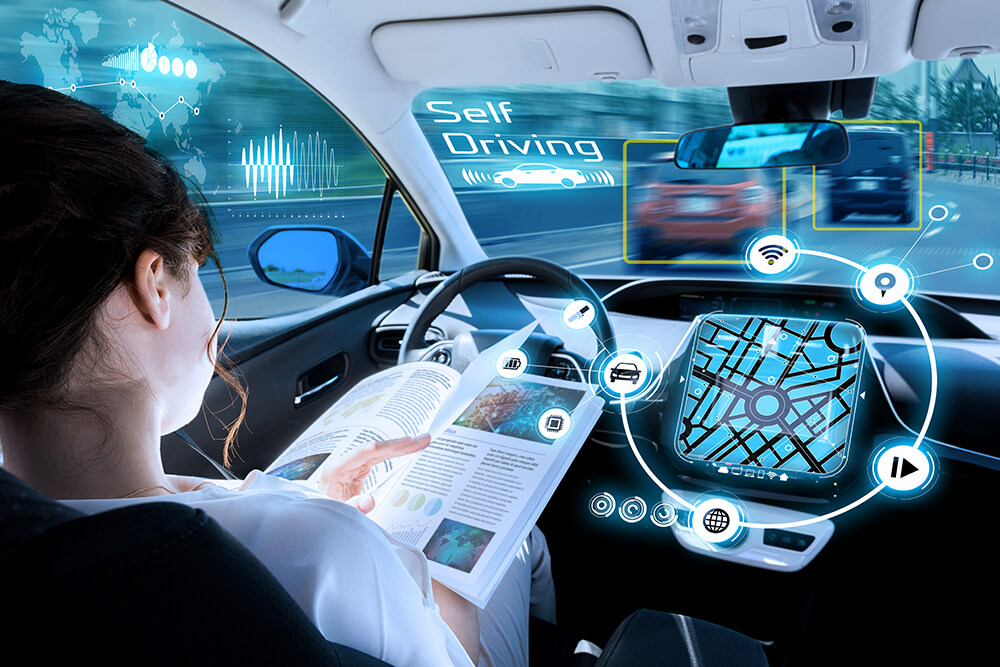
The legal profession is facing the future of autonomous vehicles in scenarios previously thought to be science fiction. The advent of driverless vehicles on Atlanta’s highways, such as I-85, is raising a whole new set of philosophical and legal questions. When an intoxicated individual makes a fully independent decision to leave to not drive while intoxicated, is he or she guilty of a crime, or is he or she exercising a very responsible use of a technological safety device?
For now, the law in Georgia doesn’t fully reflect the philosophical consequences of algorithm-driven driving. The crux of a drunk driving arrest is based on the notion of actual physical control. In Georgia, just being in the driver’s seat with the capacity to drive the car is enough to get a DUI. The definition of the operator is broad in Georgia’s legislation, and, in the case of a driver using an autonomous vehicle, the rules of DUI still apply. The state adds that, if a person can take control of the vehicle, even if the software is performing all the driving, the person is still considered a driver.
This legal fact is in conflict with itself. Over the years, society and law enforcement have worked hard to discourage drunk driving, encouraging people to designate a driver. Now, technology provides a perfect, algorithmic “designed driver” that will never be tired, distracted or intoxicated. However, somebody who uses this technology to safely get from a bar in Midtown to home can still be arrested, handcuffed and prosecuted. Ethically, it would appear to be against the spirit of the law to fine somebody who has made a conscious and deliberate decision not to drive, because they do not wish to endanger the safety of others.Ethically, it would seem to be against the spirit of the law to fine somebody who has taken a conscious and deliberate decision not to drive because they do not want to endanger the safety of others.
The doctrine of culpability is grounded on human action and intention. In a normal car, the intoxicated human is the primary source of the hazard, and they are slow to respond to the brake lights and lane changing. A highly automated vehicle (HAV) is a vehicle in which the human driver is practically eliminated from the driving task. The sensors, cameras, and code are making the split second decisions. Where is the moral wrong if the car runs flawlessly, and the person is just sitting in the driver seat, complying with all traffic rules? The state says the technology isn’t foolproof, and a person still needs to be vigilant and alert in case of an emergency. But with a drunk backup driver, that’s the first time the autonomous system’s safety benefits are being undermined.
The law will have to redraw the line as this technology matures from driver assistance to full autonomy. At the moment, the people who are experimenting with these technologies are entering into a legal gray area where they could be punished to the full extent of the law for a piece of conceptual ignorance about the law. This is a place where having a knowledgeable Atlanta DUI Lawyer is a must. These cases are unprecedented and the defense will need to turn to new legal playbooks. It demands questioning the concept of how a driver should drive in the 21st century.
James Yeargan provides an important voice on this developing area of the law. He is a former prosecutor and knows the state’s approach to building their case around the issue of actual physical control. He also is aware that law enforcement is now taught to look at the person in the front seat, and not at the dashboard computer. His experience enables him to thoroughly question the state’s assumptions, maintaining that such a citizen who is using the advanced safety technology to remove themselves from the driving equation is not a criminal with an intent to harm.
The arguments that must be advanced in defense of these cases are deep technical and philosophical. A competent Atlanta DUI Lawyer needs to be ready to teach the court about the particular amount of vehicle autonomy being utilized. One big difference between a car that keeps you in your lane and a car that goes to its destination without your input. The intoxicated human ought to be looked on as a passenger if the software is legally recognized as the driver. For the present, the only way to ensure that early adopters are not unfairly punished under old laws is to vigorously defend their rights.
Finally, it is society’s choice, whether it is more important to stick with the old definitions of the law or to actually reduce the number of traffic deaths. When the ultimate moral objective is to make roads such as I-85 free of drunk driving accidents, the final step will be establishing a legal process that will provide for a full designated driver program, as opposed to a criminal one. Until that paradigm changes, the law also sees them, not the algorithm, as the final prosecution targets, and they must realize this.