380Views
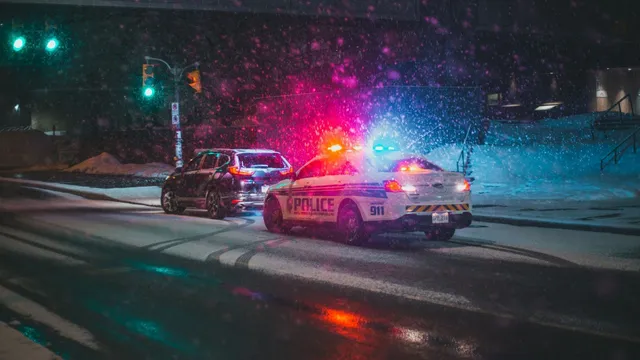
The debate over whether private drive-through restaurants are legal targets for DUI arrests in Atlanta has garnered significant attention in recent years.In recent years, the question of whether private drive-thrus are legal targets for DUI arrests in Atlanta has been a hot topic.
Atlanta’s nighttime food scene is legendary. It’s common for Buckhead and Midtown residents to unwind with a drive-thru dinner from their favorite fast-food spots after a night out. Drivers can feel safe when they drive onto a private commercial property, whether it’s a line around a popular burger joint on Northside Drive or a taco stand that is open late at night along Piedmont Avenue. Many Georgia drivers think it’s impossible for police to pull them over for driving while intoxicated on private land.There’s a dangerous misconception out there among Georgia drivers that the cops can’t pull them over if they’re driving while intoxicated on private property. This basic error of judgment results in hundreds of startling arrests per year. In the eyes of Georgia’s law enforcement, sitting in a drive thru line is no different than driving down the interstate. Once you find yourself stuck in a drive-through lane while the flashing blue lights are approaching your rearview mirror you are going to need the expertise of a seasoned Atlanta DUI Lawyer to help you through the severe legal consequences.
A private property arrest is specifically addressed in the Official Code of Georgia Annotated section 40-6-391. This statute applies to driving while intoxicated, on drugs, or otherwise affected by alcohol, drugs or other intoxicating substances. The state DUI statute is much broader geographically because, unlike some minor traffic violations, which, for example, necessitate the offense taking place on a public highway, the statute does not require that the offense be committed on a public highway. Georgia law dictates that drunk driving is prohibited on highways and elsewhere throughout the state. The legislature chose this language to remove any “geographic loopholes. In addition, Georgia courts have established that drivers using vehicles on private private roads, commercial streets and common areas are governed by the same strict laws as those on interstates. A commercial fast-food parking lot and its drive-thru are legally considered a common area available for public vehicular access. Switching the car over to the privately-owned concrete of a fast food chain provides no constitutional refuge from an active investigation. You are still covered by the state’s criminal code, and if you want to contest these charges, you will need an Atlanta DUI Attorney who knows the ins and outs of the officer’s initial interaction with you.
A drive-thru arrest is a unique and dangerous scenario due to the physical characteristics of a drive-thru. At a standard roadside traffic stop, a motorist will be able to stop on a wide shoulder, while the officer will be in an open space. A drive thru lane creates a physical trap. The cars directly in front and behind the cars are also physically blocking the vehicles, and brick restaurant walls and concrete curbs further enclose the cars. There is no “getting away with it” and no way of driving away without causing a multi car accident. These arrests usually begin in one of two different manners. First, the police dedicated task force teams patrol the parking lots of nighttime restaurants where bar patrons are likely to gather. An officer will be positioned in an unmarked vehicle and monitor all cars as they pull into the lot closely for wide turns, tire contact with the drive-thru curbing or sudden and aggressive braking. The officer will observe the target vehicle being pulled in the slow moving line, and then will move from their patrol car and walk up to the driver’s window to begin contact.
The second way to initiate is through civilian informants, namely the fast food workers at the payment kiosks and pick up windows. The shift manager at many late-night burger joints has a standard operating procedure for calling 911 when an employee hands him a bag of hamburger and smells heavy alcohol fumes, sees heavy drunken talk or open containers in the center console. The police dispatch unit calls in an officer to the restaurant and the drive-thru line is very slow moving, making it easy for the officer to catch the car before it can even pull out onto the public street. Drivers frequently say they were not driving because the vehicle was stopped, just waiting for food, while foot on the brake. This defense takes a wrong stance on the Georgia law. The prosecution is not required to prove the car was going down a roadway in order to convict the defendant. No person shall be driven or in actual physical control of any vehicle while impaired. You are in actual physical control if you are driving the vehicle, the engine is on and you can change the direction of the vehicle at the moment. The car is temporarily in a dead commercial queue which is not relevant to the state.
For the defense of a drive-thru case, there must be an extreme constitutional challenge of the officer’s lawful reason to begin the encounter. The Fourth Amendment guarantees against unreasonable searches and seizures, and thus for an officer to lawfully stop a motorist, they must have a reasonable, articulable suspicion that a crime is afoot. The tapes of the 911 calls will be a priority on James Yeargan’s list of things to subpoena, if the police were called solely on an anonymous tip from a fast-food employee. The defense will have to decide if the employee saw someone driving erratically or if they noticed some odor, but it could have been from a passenger. A top DUI Attorney in Atlanta will carefully look at officer dash camera and body camera footage, if the officer initiated the stop solely from his or her own personal observation of the driver in a parking lot. If the video shows the driver avoided hitting any concrete boundaries, or making any erratic maneuvers while navigating the narrow drive-thru lane, the defense can file a comprehensive motion to suppress all of the evidence collected following the illegal detention. The stakes are high in a private property arrest, and it is important to obtain a strong Atlanta DUI Attorney right after the arrest in order to preserve your driving privileges, your career and your permanent criminal history.